Monday, July 31, 2006

Arturo O'Farrill 's Afro Latin Jazz Orchestra


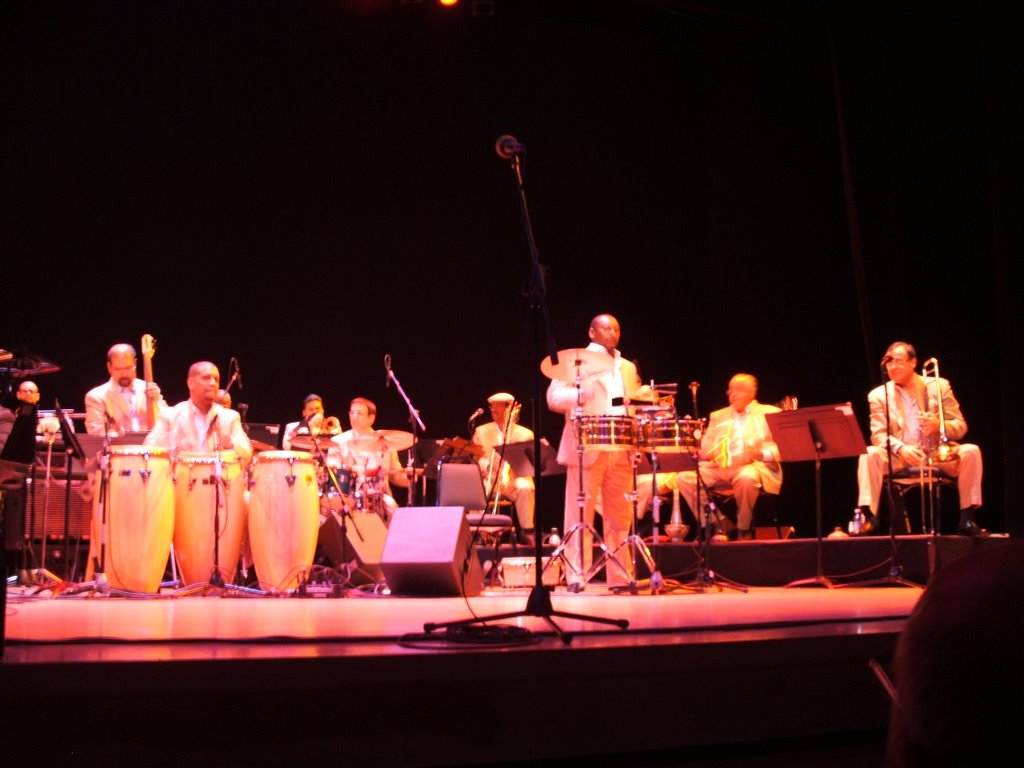
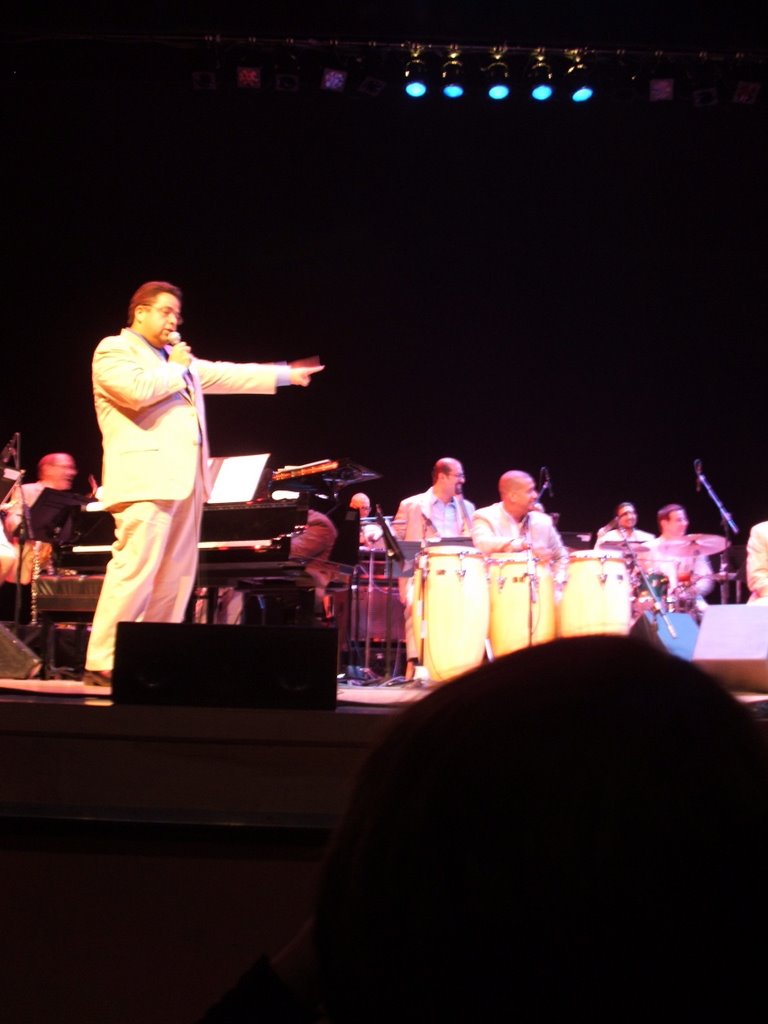
The Afro Latin Jazz Orchestra played in Santa Fe last weekend. Led by Arturo O' Farrill, the son of the famous composer Chico o'Farrill, the group is made up of 18 soloists from the Latin Jazz scene in New York. They played the classics of the Afro Latin jazz tradition as well as some new material composed by Arturo. This was definitely the tightest 18 piece group I have ever seen.

Hare Krishnas on the Beach


To round out my trip to the Midwest I joined the Hare Krishnas on the beach for some music and delicious vegetarian food while the sun set. The music had an eastern feel, they were singing along with a harmonium, drums and finger cymbals. Many of them have been doing this their whole life and displayed great talent with music and cooking.

Sunday, July 30, 2006

The Gris Gris in Chicago


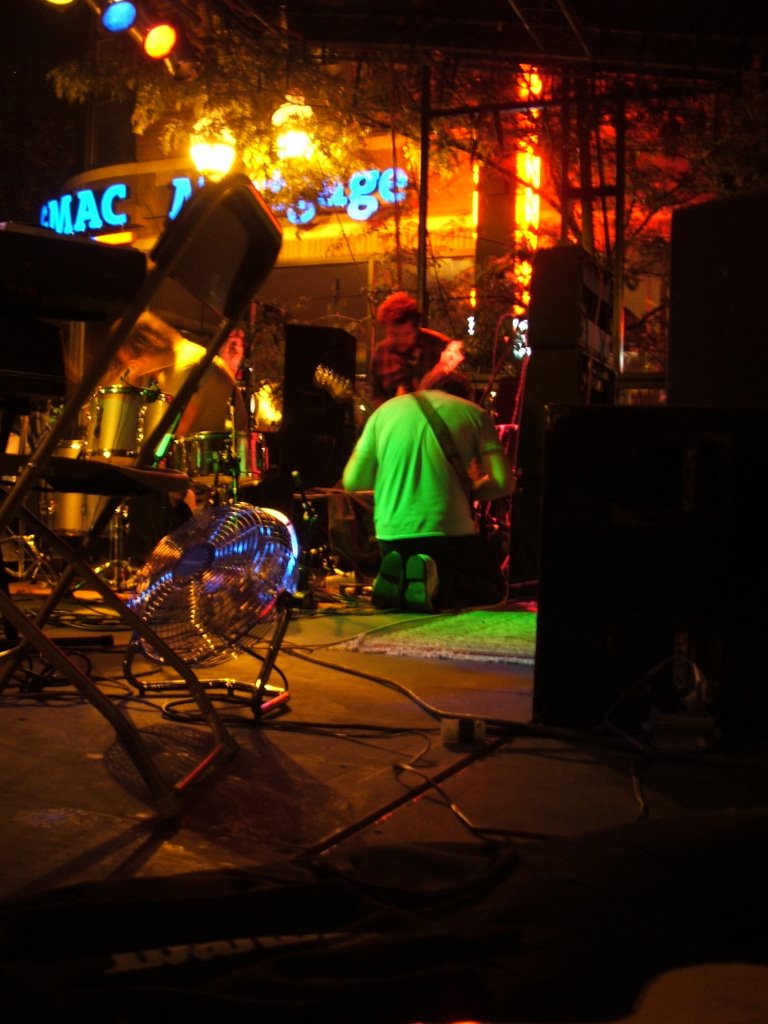
The San Francisco, psychedelic band the Gris Gris played at the Wicker Park Street Festival in Chicago. The outdoor setting gave the experience a different feel. The sound was good and the band was great as always. They tour like crazy so go see them, you won't be disappointed.

The Pizazz/ Human Eye at the Northern Lights Lounge


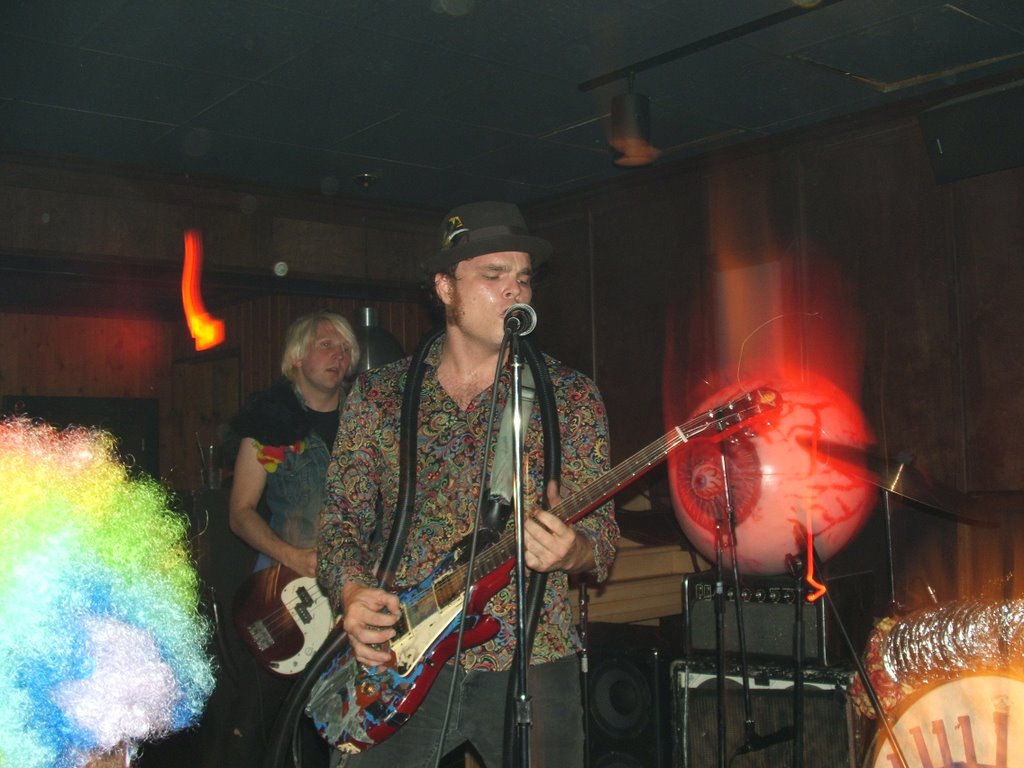
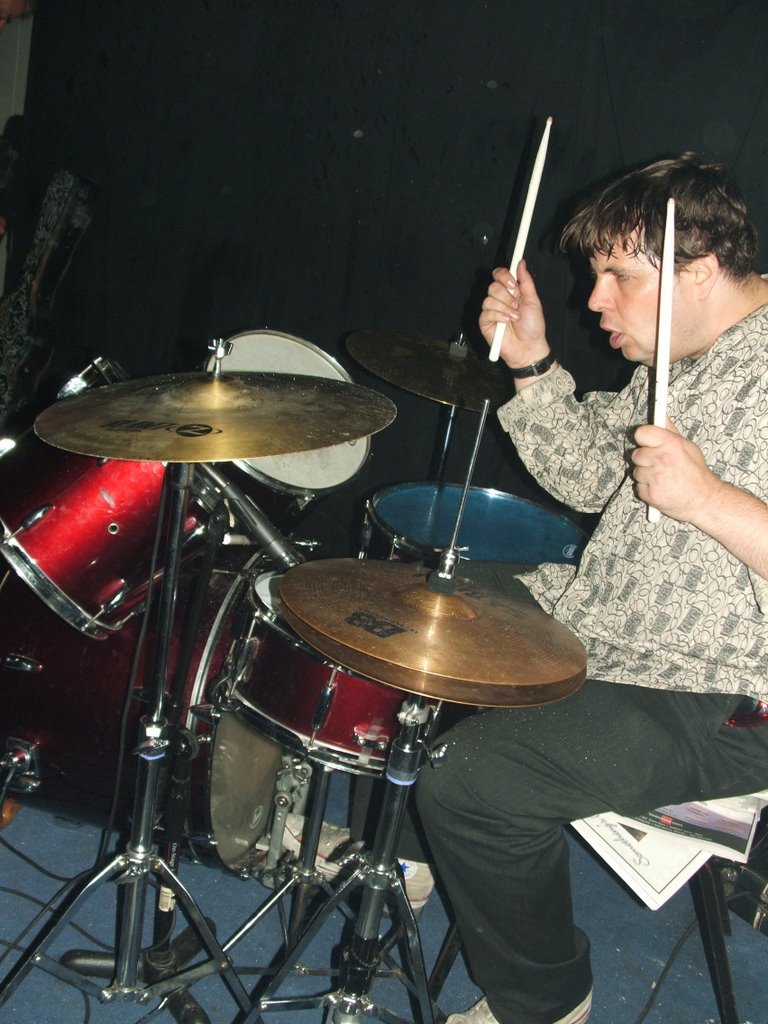
Two of Detroit's up and coming bands played together last Saturday. The Pizazz opened up and sounded great. The Pizazz have catchy songs, using elements of new wave and 70's punk, it's fun and interesting music. After the Pizazz came Human Eye, a group that I play the drums in. Human Eye plays alien punk mixed with rock n roll and psychedelic, progressive music. There is a Human Eye 45 coming out soon on Ypsilanti records.

Chris Turner at the Bohemian National Home


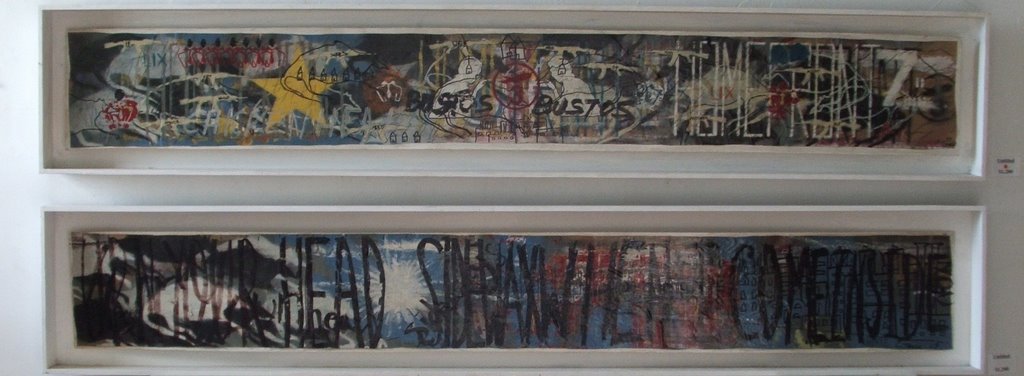
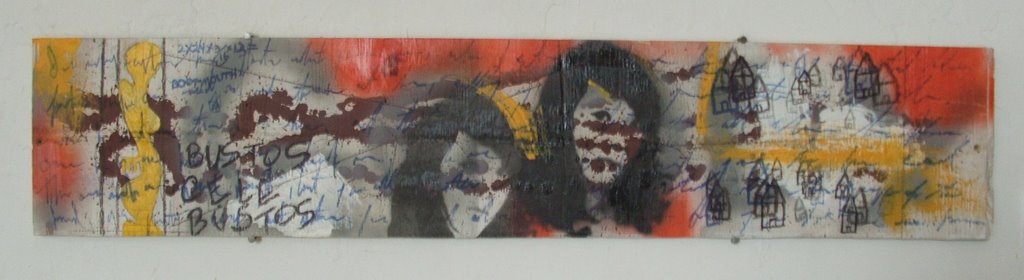
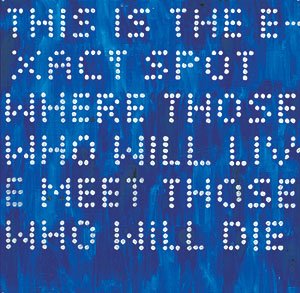
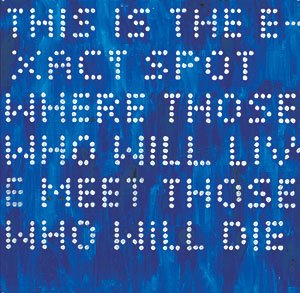
I caught the end of the Chris Turner show last weekend, these are a couple of the pieces that were still there. Turner has been working on paintings like these for a while. Working with text and stencils on long horizontal panels, Turner fills his compositions with an overload of content. The larger canvases are more expressive, with looser painting and broader composition. Chris Turner paintings are full of repetition and surprises as well. Turner is also a great sculptor, you can see his work all over Detroit.

Saturday, July 29, 2006

Jacque Liu: Sight Lines


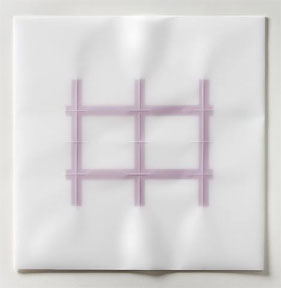
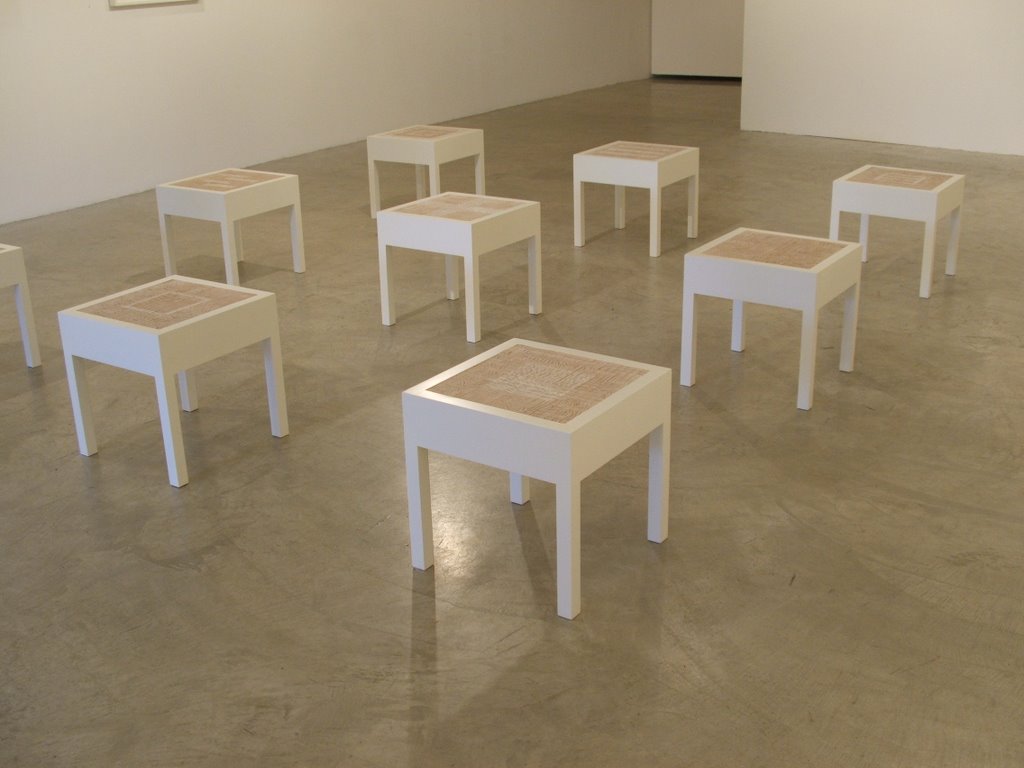
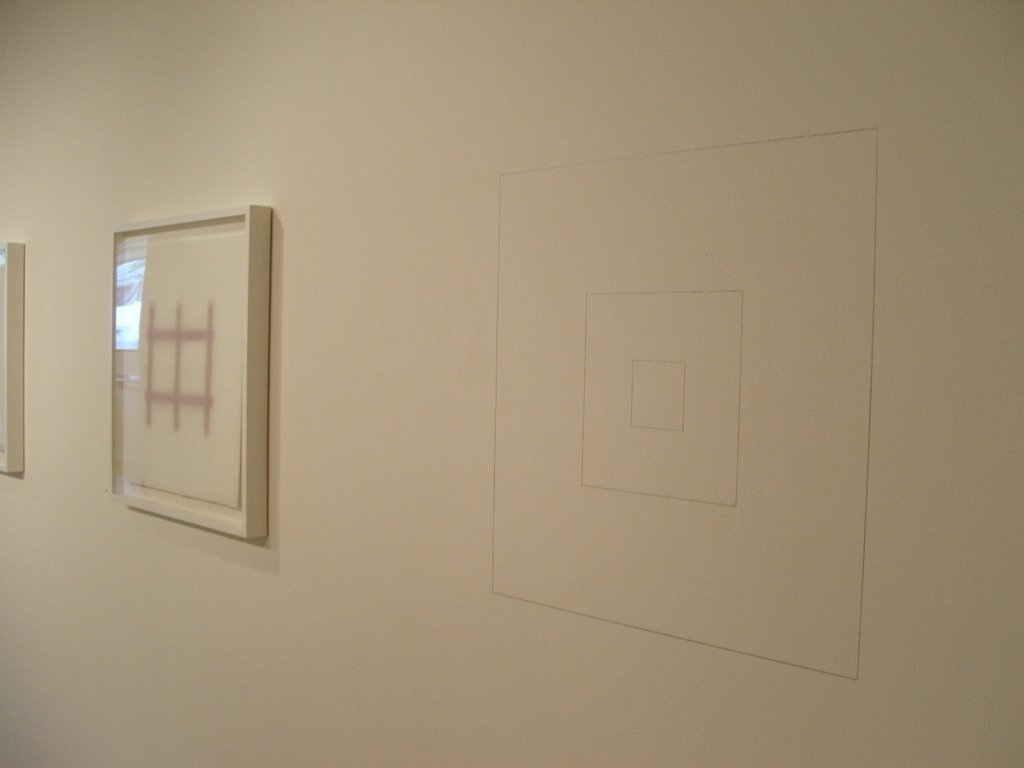
Jacque Liu's show is at the Lemberg Gallery in Ferndale, MI. Jacque uses folded pieces of mylar over shapes of colored paper. Mylar is semi-transparent but foggy creating a mystery about the color underneath. When a color is present the question arises, is it paint? Paper is the chosen medium that fits the artist's sensibilities. Jacque Liu has been working with paper for some time, drawing but also folding to create value supporting the lines. The folded lines are clearly read in natural light. The installation also includes drawing on the walls next to the framed work reflecting precise spatial relationships. There are also well crafted, functional chairs made with wood and memory foam. After sitting an impression was left on the chair, then it slowly returned to its flat surface. The installation is one to experience first hand. If you are in Michigan, don't miss Jacque Liu: Sight Lines, a thoughtful presentation of high quality work.

Friday, July 28, 2006

John Azoni at MIA and MONA


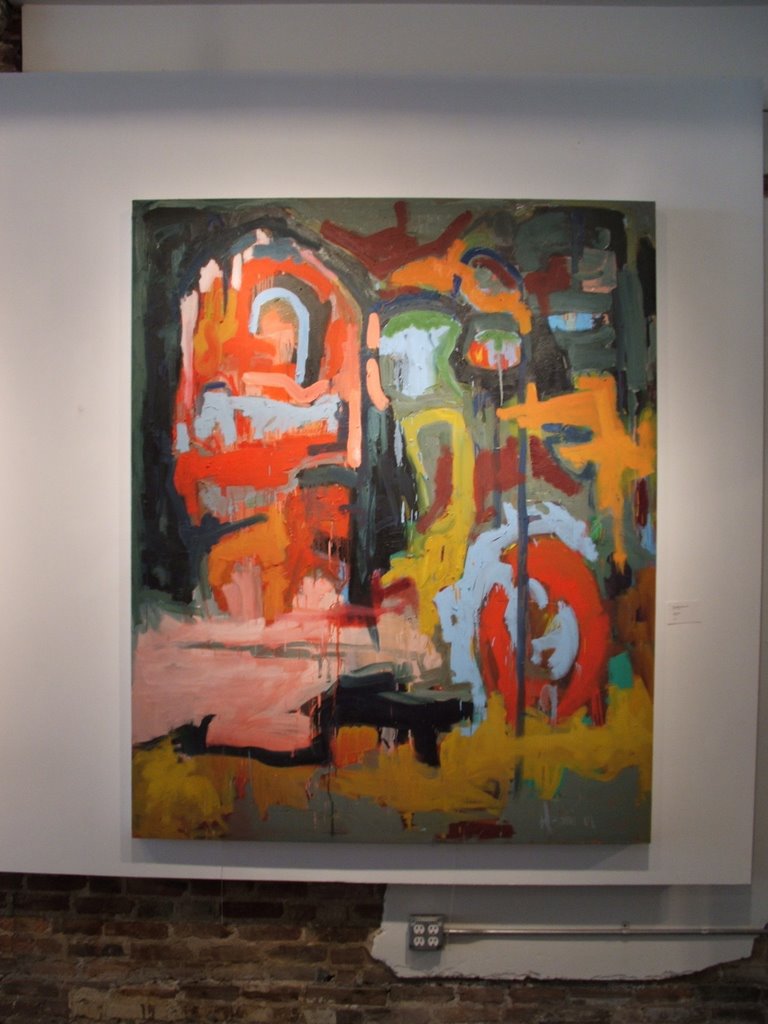
The Museum of New Art and the Michigan Institute of Arts are both showing the paintings of John Azoni. John is a prolific young painter with a lot of large work. John's painting process appears to be fast and intuitive in the classic expressionist style. The work floats between abstract and representational. The plethora of paintings allow viewers to see development and experimentation. It's great to see so much work from one artist on view as a big solo show.

Thursday, July 27, 2006

Motor City Show


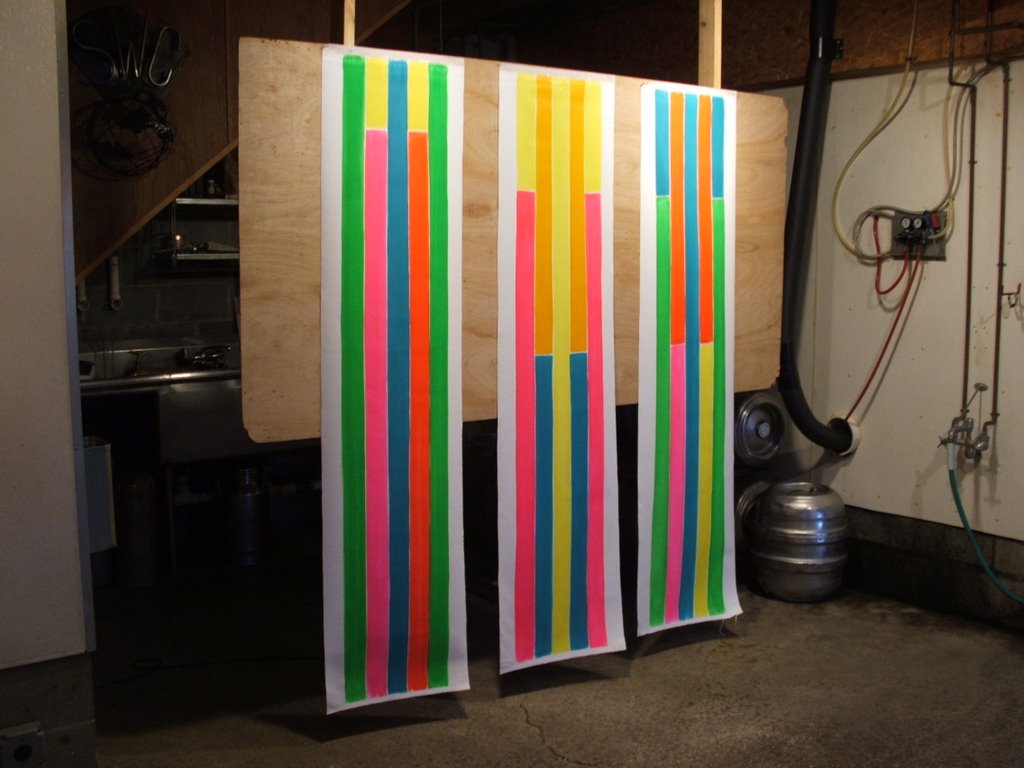
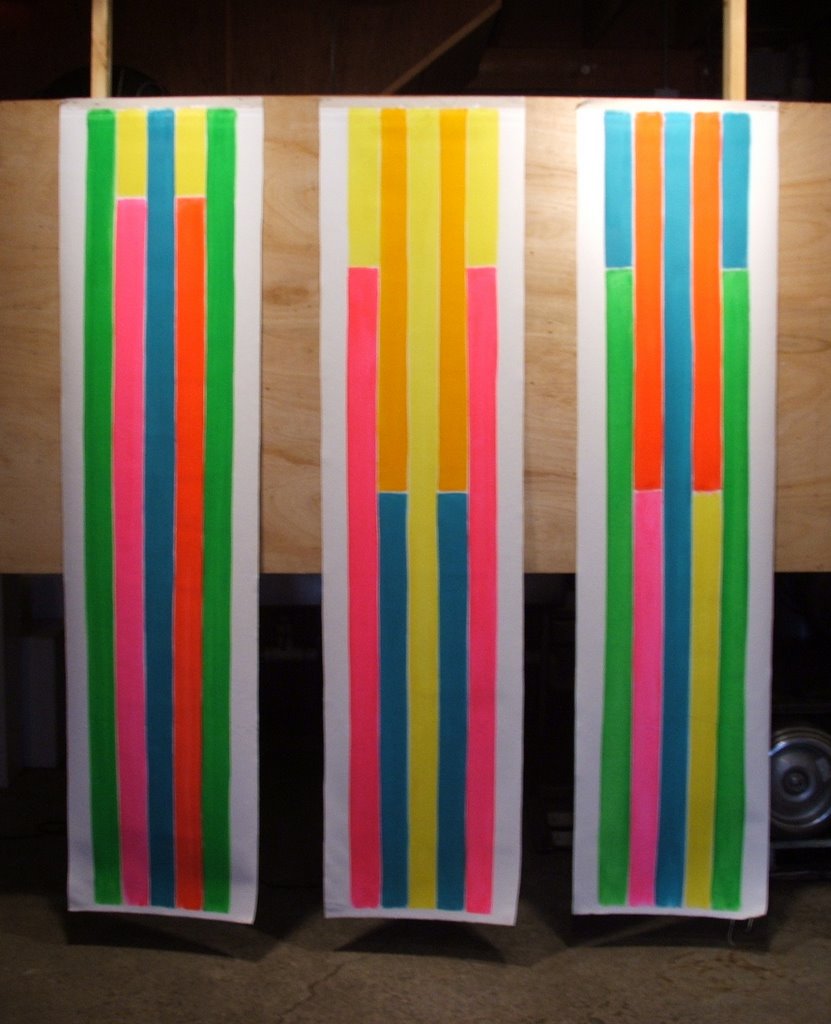
Here are some pictures from my show from last Wednesday. I made these about seven feet tall and luckily the top of the wall was right around seven feet. This made for a quick installation. The half walls worked out, I also liked the size of the room. The work is big, yet portable. These roll up and fit in my carry on bag nicely. It was nice to go back to Detroit and see some friends. Now I am in New Mexico again and making some larger paintings. I have a few new body's of work ready for larger size spaces when the opportunity comes.

Frustrations/Functional Blackouts/Sneaky Pinks

Sneaky Pinks

Functional Blackouts

Frustrations
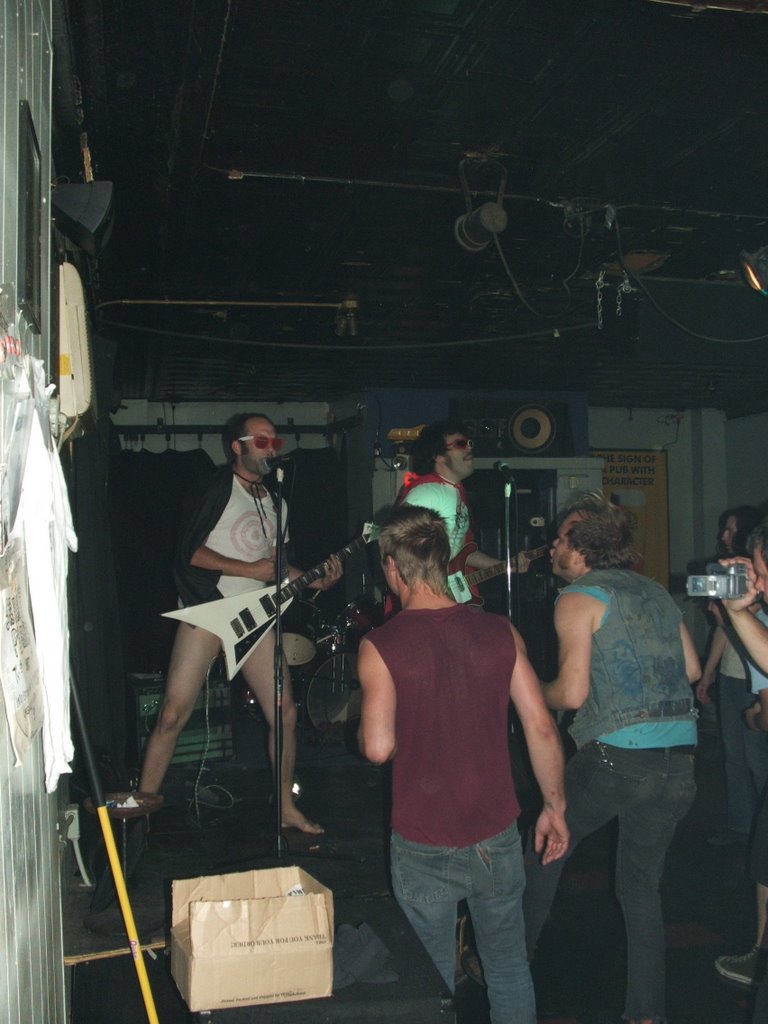
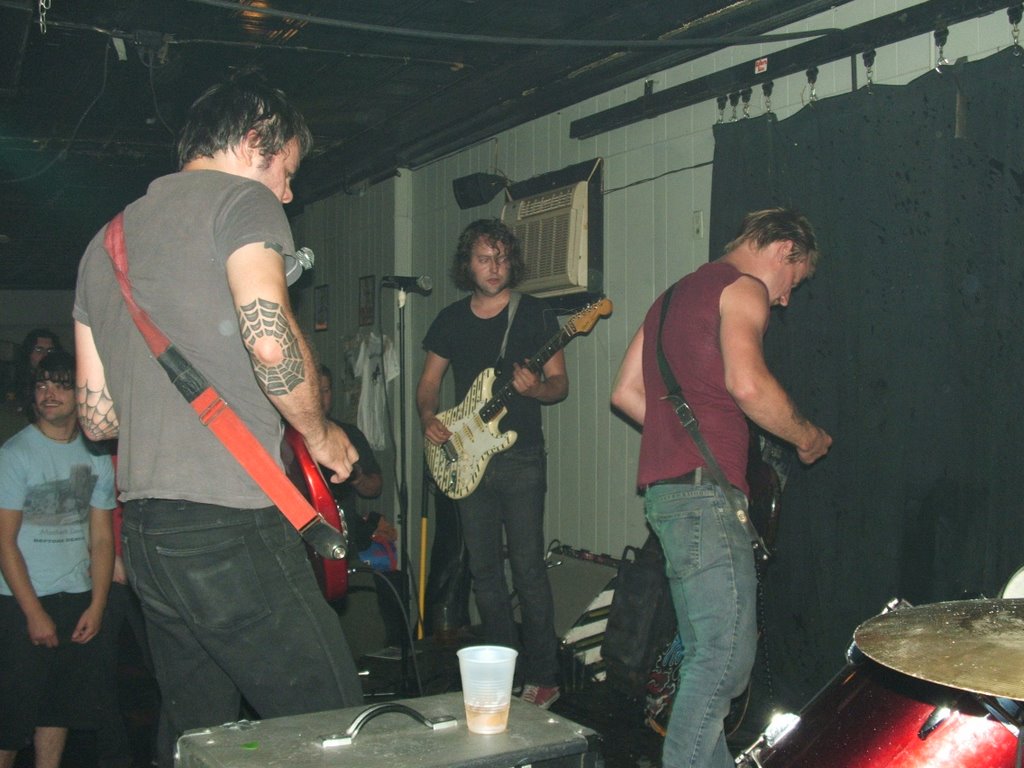
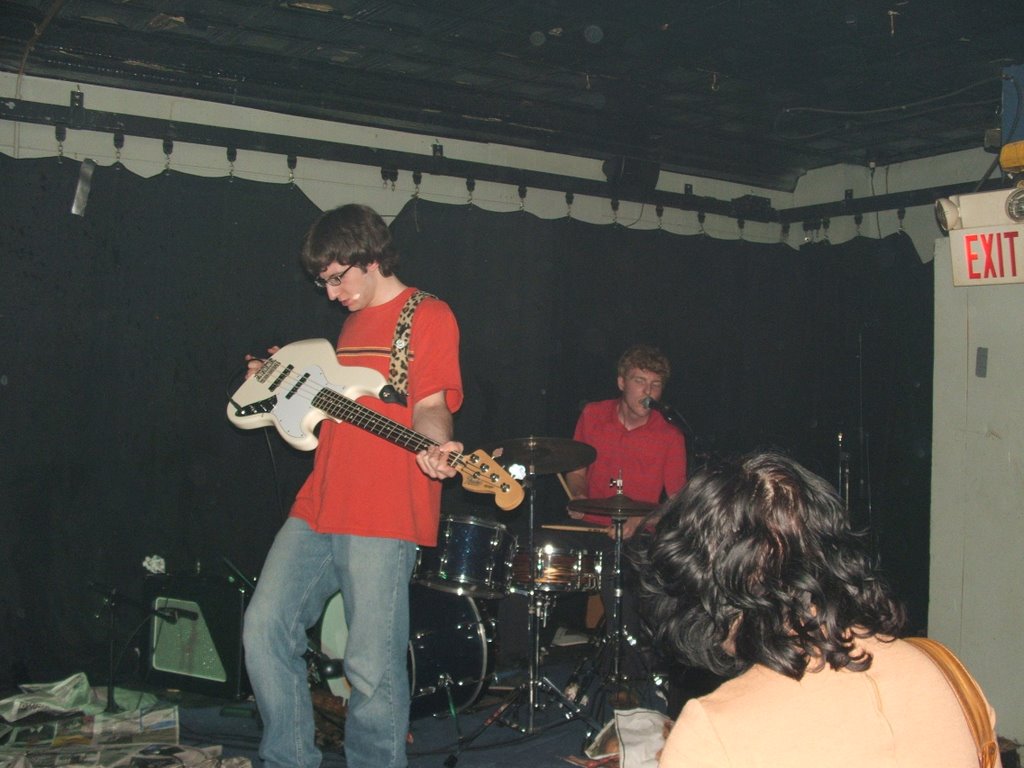
Last week I spent my Tuesday night at the Painted Lady to get a much needed dose of crazy punk rock music. The Sneaky Pinks from Arizona opened and they weren't wearing pants. They played some high energy, fun and fast music. The Functional Blackouts really impressed me, their drummer played some creative rhythms on the toms pushing the band into more interesting territory. The Functional Blackouts from Chicago are getting better every time I see them. Closing were the Frustrations from Detroit. Another exciting young band with a great drummer. This music is taking punk to different places in a good way. It's still unhealthy and sick but the music is more developed with different influences showing.

Brad Ogan


Brad Ogan is an accomplished figurative draftsman and stone sculptor who recently transitioned into the realm of color field painting. Brad's figurative work is sensitive with line. After looking at the figurative work I wish he could find a place to incorporate line in his new color work but I know that doesn't happen so easily. Brad may be better off doing what he's doing, applying a loose approach like Frankenthaler or Lewis. I always get excited for an artist who follows his or her interests to new places. Living and working in central Illinois, Brad is somewhat isolated in his studio. I am sure he would appreciate any comments left about his work.

Saturday, July 15, 2006

New Work


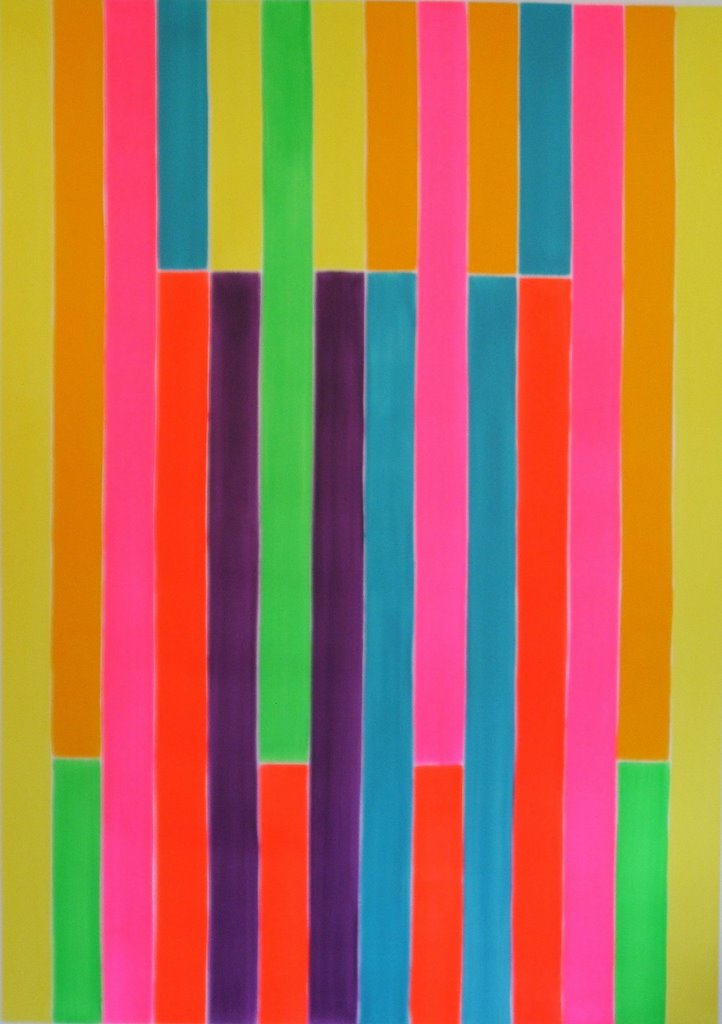
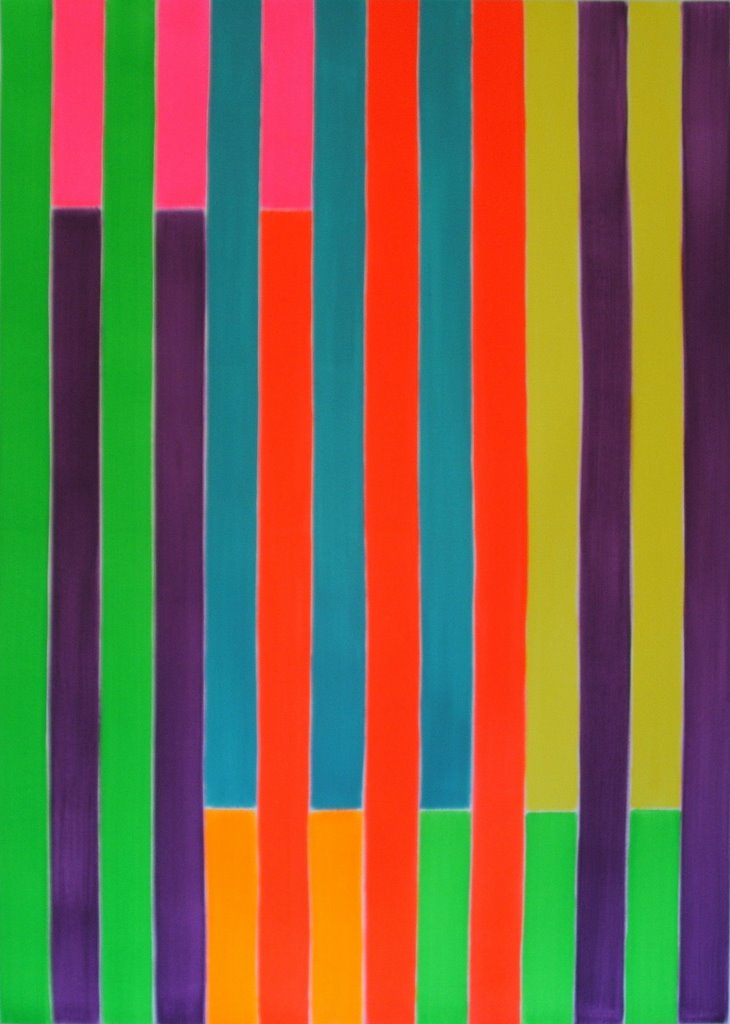
Here are two of my new oil paintings. These paintings are wider with fourteen, four and a half inch bars of color across(90"x 64" each). Symmetrical compositions that aren't so symmetrical. These paintings won't fit on the plane but I am showing some smaller new work this Wednesday at the Motor City Brewery in Detroit.

Site Santa Fe Biennial

Jennifer Bartlett


The Site Santa Fe Biennial opened last week. The Site Santa Fe space is very large and impressive. The biennial had a great variety of work from photography, installation, sound, video, performance, and painting. Some of the highlights of the show were Jennifer Bartlett's colorful paintings, Wolfgang Laib, Catherine Opie's portraits, Stephen Dean's dartboards, Robert Grosvenor and the Christina Iglesias installation. The exhibit doesn't allow photography but there is a
2006 biennial official website with the artist's images and information on the curator Klaus Ottmann. Site Santa Fe is free to the public every Friday. I will probably return once or twice before it's over in January. This is the kind of show that takes some time to absorb due to the wide range of ideas presented.
Tuesday, July 11, 2006

Frederick Hammersley


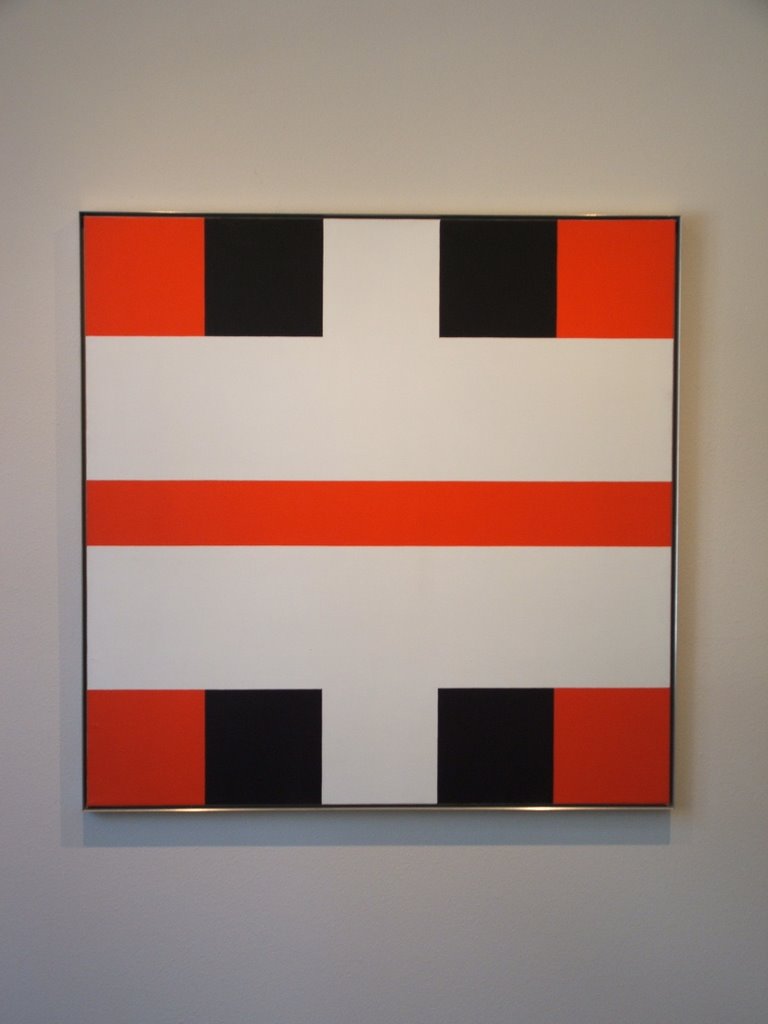
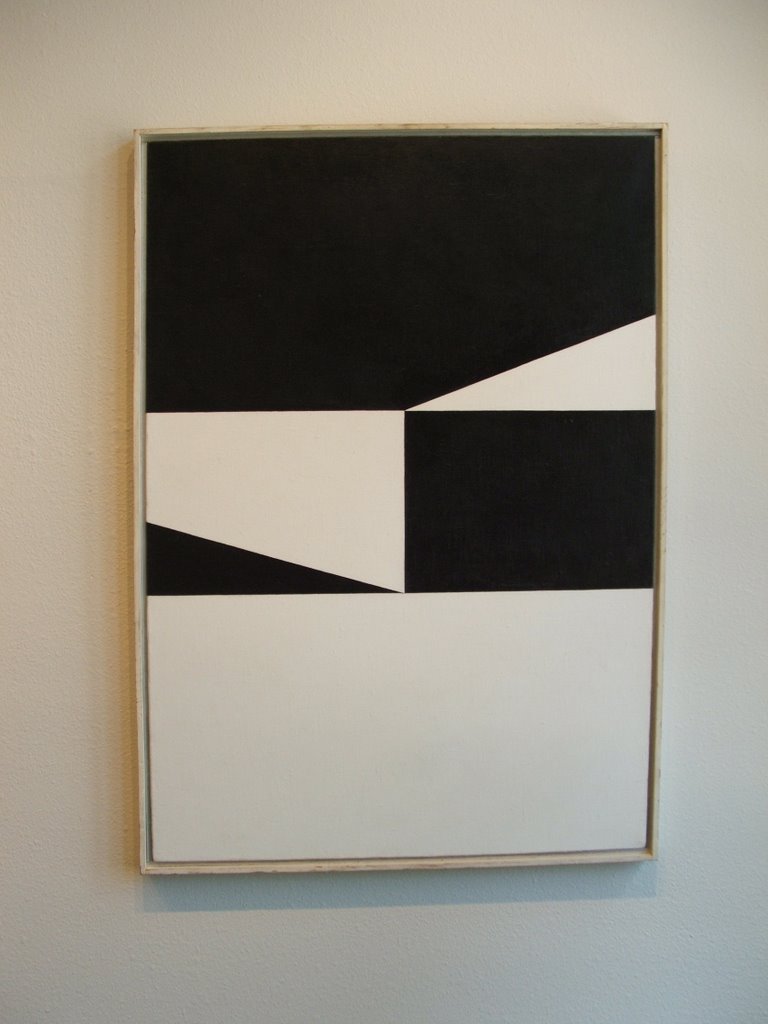
Frederick Hammersley is showing at Charlotte Jackson Fine Art in Santa Fe. The show, subtitled "Hard Edge," is a retrospective of Hammersley's work, showcasing work from the fifties, sixties, and seventies. Hammersley experimented a great deal not only with abstraction but with the new technology of computers, (in particular the 14000 CORE IBM from the University of New Mexico's main frame). In the late sixties the computer was a new and exciting medium and it is interesting to see a large installation of primitive computer compositions. The hard edged oil paintings of the seventies are the strongest works in the show but the small works on paper from the fifties are more experimental and varied.
There is a good collection of artwork to satisfy one's interest in color and space. "Hard Edge" runs until July 30th. Don't miss this fine exhibit which spans Frederick Hammersley's career.

Wednesday, July 05, 2006

Mexican Modern

Maria Izquiardo
Diego Rivera

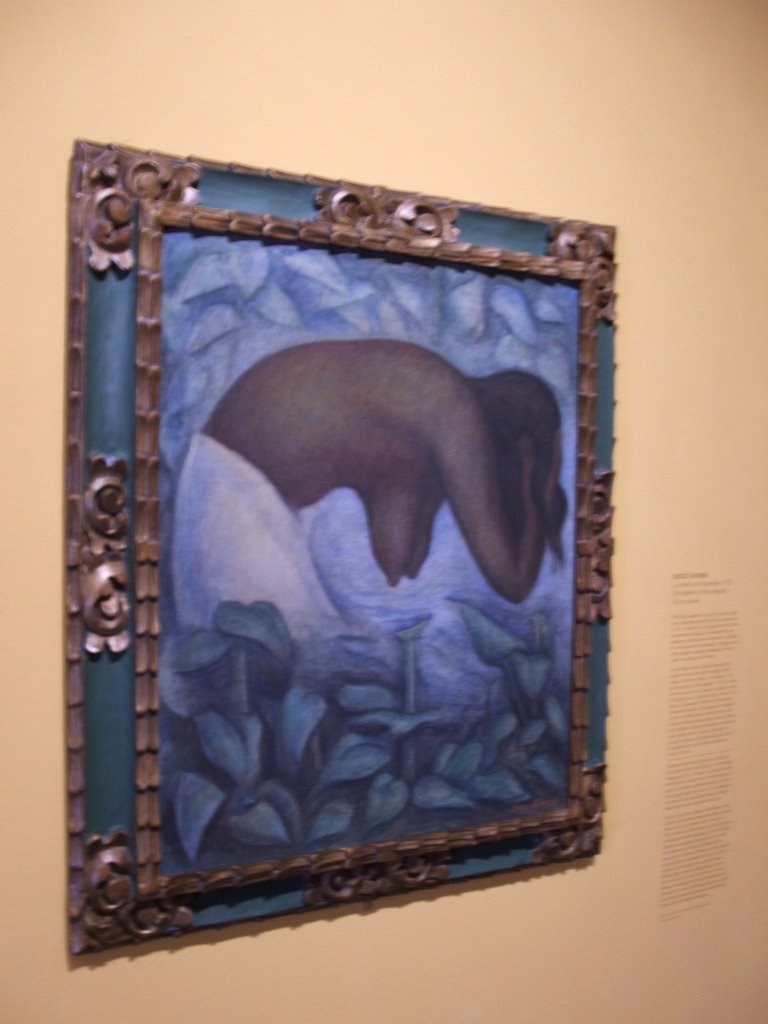
I snuck a couple of pictures at the Mexican Modern exhibit. Overall the show had some very emotional portraits and lots of symbolism. There were well known artists like Diego Rivera, and Frida Kahlo but for me it was an introduction to some of the lesser known and very interesting Mexican artists. Maria Izquiardo was one of the most impressive artists in the show.

Tuesday, July 04, 2006

Marsden Hartley


Abstraction with Flowers, 1913


Marsden Hartley: American Modern
Jun 09, 2006 - Sep 03, 2006
The Museum of Fine Arts features sixty paintings by Marsden Hartley. The show covers Hartley's entire career and his many changes in style, from representational to abstract. Hartley's infuences clearly include Matisse, Picasso, Cezanne and Kandinsky. Hartley's severe experimentalist philosophy left us with a variety show of work. The artist woke up one morning and decided to be a different artist, a few times. This is not a bad thing considering the revolutionary period in which he lived. Hartley was also a writer, this is one of his statements.

Marsden Hartley, "Art and the Personal Life," 1928

As soon as a real artist finds out what art is, the more is he likely to feel the need of keeping silent about it, and about himself in connection with it. There is almost, these days, a kind of petit scandale in the thought of allying oneself with anything of a professional nature. And it is at this point that I shrink a little from asserting myself with regard to professional aspects of art. And here the quality of confession must break through. I have joined, once and for all, the ranks of the intellectual experimentalists. I can hardly bear the sound of the words "expressionism," "emotionalism," "personality," and such, because they imply the wish to express personal life, and I prefer to have no personal life. Personal art is for me a matter of spiritual indelicacy. Persons of refined feeling should keep themselves out of their painting, and this means, of course, that the accusation made in the form of a querulous statement to me recently "that you are a perfectionist" is in the main true.

I am interested then only in the problem of painting, of how to make a better painting according to certain laws that are inherent in the making of a good picture and not at all in private extraversions or introversions of specific individuals. That is for me the inherent error in a work of art. I learned this bit of wisdom from a principle of William Blake's which I discovered early and followed far too assiduously the first half of my aesthetic life, and from which I have happily released myself and this axiom was: "Put off intellect and put on imagination; the imagination is the man." From this doctrinal assertion evolved the theoretical axiom that you don't see a thing until you look away from it which was an excellent truism as long as the principles of the imaginative life were believed in and followed. I no longer believe in the imagination. I rose one certain day and the whole thing had become changed. I had changed old clothes for new ones, and I couldn't bear the sight of the old garments. And when a painting is evolved from imaginative principles I am strongly inclined to turn away because I have greater faith that intellectual clarity is better and more entertaining than imaginative wisdom or emotional richness. I believe in the theoretical aspects of painting because I believe it produced better painting, and I think I can say I have been a fair exponent of the imaginative idea.

I have come to the conclusion that it is better to have two colors in right relation to each other than to have a vast confusion of emotional exuberance in the guise of ecstatic fullness or poetical revelation both of which qualities have, generally speaking, long since become second rate experience. I had rather be intellectually right than emotionally exuberant, and I could say this of any other aspect of my personal experience.

I have lived the life of the imagination, but at too great an expense. I do not admire the irrationality of the imaginative life. I have, if I may say so, made the intellectual grade. I have made the complete return to nature, and nature is, as we all know, primarily an intellectual idea. I am satisfied that painting also is like nature, an intellectual idea, and that the laws of nature as presented to the mind through the eye and the eye is the painter's first and last vehicle are the means of transport to the real mode of thought: the only legitimate source of aesthetic experience for the intelligent painter.

All the "isms," from Impressionism down to the present moment, have had their inestimable value and have clarified the mind and the scene of all superfluous emotionalism; the eye that turns toward nature today receives far finer and more significant reactions than previously when romanticism and the imaginative or poetic principles were the means and ways of expression.

I am not at all sure that the time isn't entirely out of joint for the so called art of painting, and I am certain that very few persons, comparatively speaking, have achieved the real experience of the eye either as spectator or performer. Modern art must of necessity remain in the state of experimental research if it is to have any significance at all. Painters must paint for their own edification and pleasure, and what they have to say, not what they are impelled to feel, is what will interest those who are interested in them. The thought of the time is the emotion of the time.

I personally am indebted to Segantini the impressionist, not Segantini the symbolist,, for what I have learned in times past of the mountain and a given way to express it just as it was Ryder who accentuated my already tormented imagination. Cubism taught me much and the principle of Pissarro, furthered by Seurat, taught me more. These with Cezanne are the great logicians of color. No one will ever paint like Cezanne for example, because no one will ever have his peculiar visual gifts; or to put it less dogmatically, will anyone ever appear again with so peculiar and almost unbelievable a faculty for dividing color sensations and making logical realizations of them? Has anyone ever placed his color more reasonably with more of a sense of time and measure than he? I think not, and he furnished for the enthusiast of today new reasons for research into the realm of color for itself.

It is not the idiosyncrasy of an artist that creates the working formula, it is the rational reasoning in him that furnishes the material to build on. Red, for example, is a color that almost any ordinary eye is familiar with but in general when an ordinary painter sees it he sees it as isolated experience with the result that his presentation of red lives its life alone, where it is placed, because it has not been modified to the tones around it and modification is as good a name as any for the true art of painting color as we think of it today. Even Cezanne was not always sure of pure red, and there are two pictures of his I think of, where something could have been done to put the single hue in its place the art for which he was otherwise so gifted. Real color is in a condition of neglect at the present time because monochrome has been the fashion for the last fifteen or twenty years even the superb colorist Matisse was for a time affected by it. Cubism is largely responsible for this because it is primarily derived from sculptural concepts and found little need for color in itself. When a group feeling is revived once again, such as held sway among the Impressionists, color will come into its logical own. And it is timely enough to see that for purposes of outdoor painting, Impressionism is in need of revival.
Yet I cannot but return to the previous theme which represents my conversion from emotional to intellectual notions; and my feeling is: of what use is a painting which does not realize its aesthetical problem? Underlying all sensible works of art, there must be somewhere in evidence the particular problems understood. It was so with those artists of the great past who had the intellectual knowledge of structure upon which to place their emotions. It is this structural beauty that makes the old painting valuable. And so it becomes to me a problem. I would rather be sure that I had placed two colors in true relationship to each other than to have exposed a wealth of emotionalism gone wrong in the name of richness of personal expression. For this reason I believe that it is more significant to keep one's painting in a condition of severe experimentalism than to become a quick success by means of cheap repetition.
The real artists have always been interested in this problem, and you feel it strongly in the work of Da Vinci, Piero della Francesca, Courbet, Pissarro, Seurat, and Cezanne. Art is not a matter of slavery to the emotion or even a matter of slavery to nature or to the aesthetic principles. It is a tempered and happy union of them all.


Monday, July 03, 2006

Milton Avery at Riva Yares Gallery


The Milton Avery show at the Riva Yares gallery covers a large span of his career. My favorite is the "Sunburned Couple" from 1943, great skin colors. After I expressed some interest, the staff at Riva Yares gave me a few catalogs to study. From the Avery catalogues, this was the eulogy Mark Rothko gave at Avery's funeral. (click to see larger)

Saturday, July 01, 2006

Riva Yares Gallery

Morris Lewis
Morris Lewis
Hans Hofmann
Helen Frankenthaler
Gene Davis

The Riva Yares Gallery in Santa Fe holds an amazing collection of modernist painters. Museum-like with it's large viewing space, the gallery collection focuses on the experimentality of the times when color painting was fresh. Seeing Lewis and Frankenthaler paintings in the same room boosted my sensitivity and awareness of the fluidity of the poured paintings. The color poured on the canvas creates a sense of freedom, the paint flows into space. The looseness of the paint application feels natural and appropriate for the expression of color. The Riva Yares Gallery has left a strong impression, these artists are so influential and important to me that I have to return to the gallery soon and continue to study their work.